
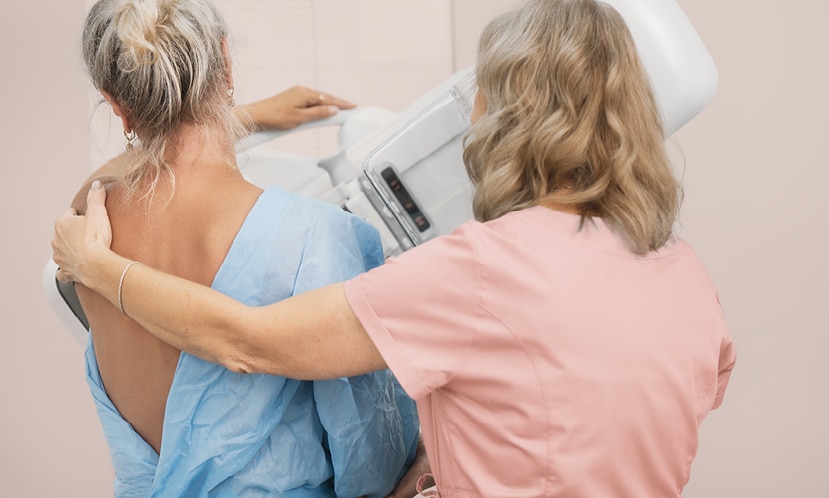
If you had a mammogram recently, it may have shown that you have dense breasts. Although this finding is common, many people aren’t sure what this means or how it may affect their health. Having dense breast tissue isn’t something you can see or feel, but it can make breast cancer harder to detect on a mammogram and is associated with an increased risk of developing the disease.
Understanding your breast density can help you have informed conversations with your healthcare provider about your breast cancer risk and whether additional screening may be right for you.
What are dense breasts?
Breasts are part of both the male and female anatomy, but they are more highly developed in women. For women, breasts are made up of various components, including:
- Breast tissue: There are three different types of breast tissue – glandular, connective (fibrous) tissue and fatty (adipose) tissue.
- Lobes: Each breast contains 15-20 sections of glandular tissue called lobes, which produce milk during lactation. Within the lobes are lobules – small, bulblike glands that produce milk.
- Milk ducts: These small ducts, or tubes, transport milk from the glandular tissues to the nipple.
- Blood vessels: Blood vessels circulate blood throughout your breasts, chest and body.
- Lymph nodes: These small organs filter fluid from the breast tissue and help fight infection.
When healthcare providers talk about breast density, they are referring to how much of the breast is made up of glandular and fibrous (fibroglandular) tissue versus fatty tissue. Breasts are considered dense when they contain more fibroglandular tissue and less fatty tissue.
How do I know if I have dense breasts?
The only way to know your breast density is to have a mammogram. Your provider will be able to determine if you have more fatty tissue or more fibroglandular tissue in your breasts.
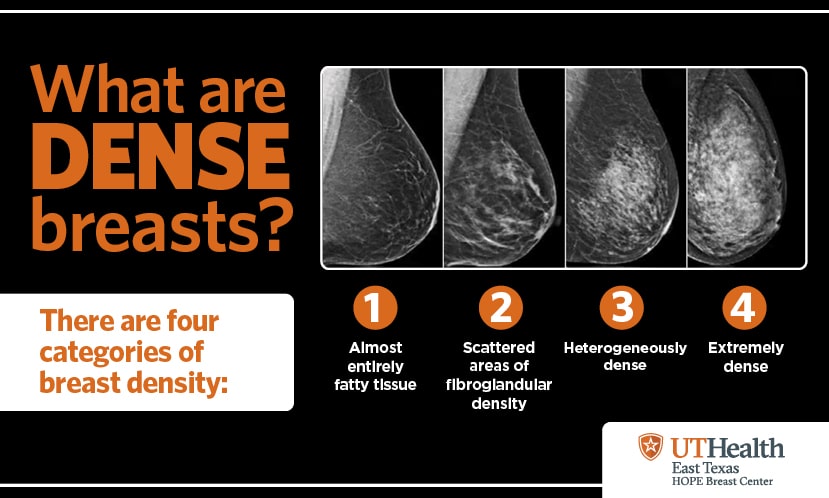
Breast density is measured through the American College of Radiology’s Breast Imaging, Reporting and Data System, or BI-RADS. Their system categorizes four levels of breast density:
- A: Almost entirely fatty tissue. There is very little dense breast tissue.
- B: Scattered areas of fibroglandular density. This means your breasts are mostly made up of fatty tissue, but there are some areas that contain more dense tissue.
- C: Heterogeneously dense, which means that most of the breast is made up of dense tissue, but there are some areas of fatty tissue.
- D: Extremely dense, meaning almost all of the breast tissue is dense.
What causes breasts to become dense?
Age is the primary factor that determines breast density, with younger women having more dense breasts. However, breast density doesn’t significantly change over the course of a person’s life.
Other factors that affect breast density include:
- Having a lower body mass index: Having less overall body fat makes it more likely you have less fatty tissue in your breasts.
- Taking hormone therapy medication for menopause: Studies have shown that hormone replacement therapy (HRT) often causes fibroglandular breast tissue to grow or become denser.
Am I more likely to develop breast cancer if I have dense breasts?
Yes. Having dense breasts increases your chances of developing breast cancer by about four to six times. Because breast tissue and breast cancer show up white on mammograms, it makes tumors easy to miss, with up to 50% of cancers in dense tissue going undetected during a mammogram.
What are the best screenings for dense breasts?
In general, healthcare providers recommend mammograms for women with an average risk of breast cancer. However, additional testing may be needed if you have dense breast tissue.
Other tests may include:
- 3D mammogram: Also called breast tomosynthesis, a 3D mammogram uses X-rays to capture multiple images of the breast from different angles to create a layered, three-dimensional view.
- Breast MRI: This test uses radio waves to create detailed 3D images of breast tissue.
- Breast ultrasound: This imaging test utilizes high-frequency sound waves to capture pictures of breast tissue.
What comes next?
While having dense breasts is common and not a condition that can be prevented, it is an important factor in breast cancer screening and risk assessment. If you have been told you have dense breasts, talk with your healthcare provider about what that means for your individual health and whether additional screening tests may be beneficial.
Staying informed, keeping up with recommended mammograms and understanding your breast density can help support early detection and better breast health outcomes.