
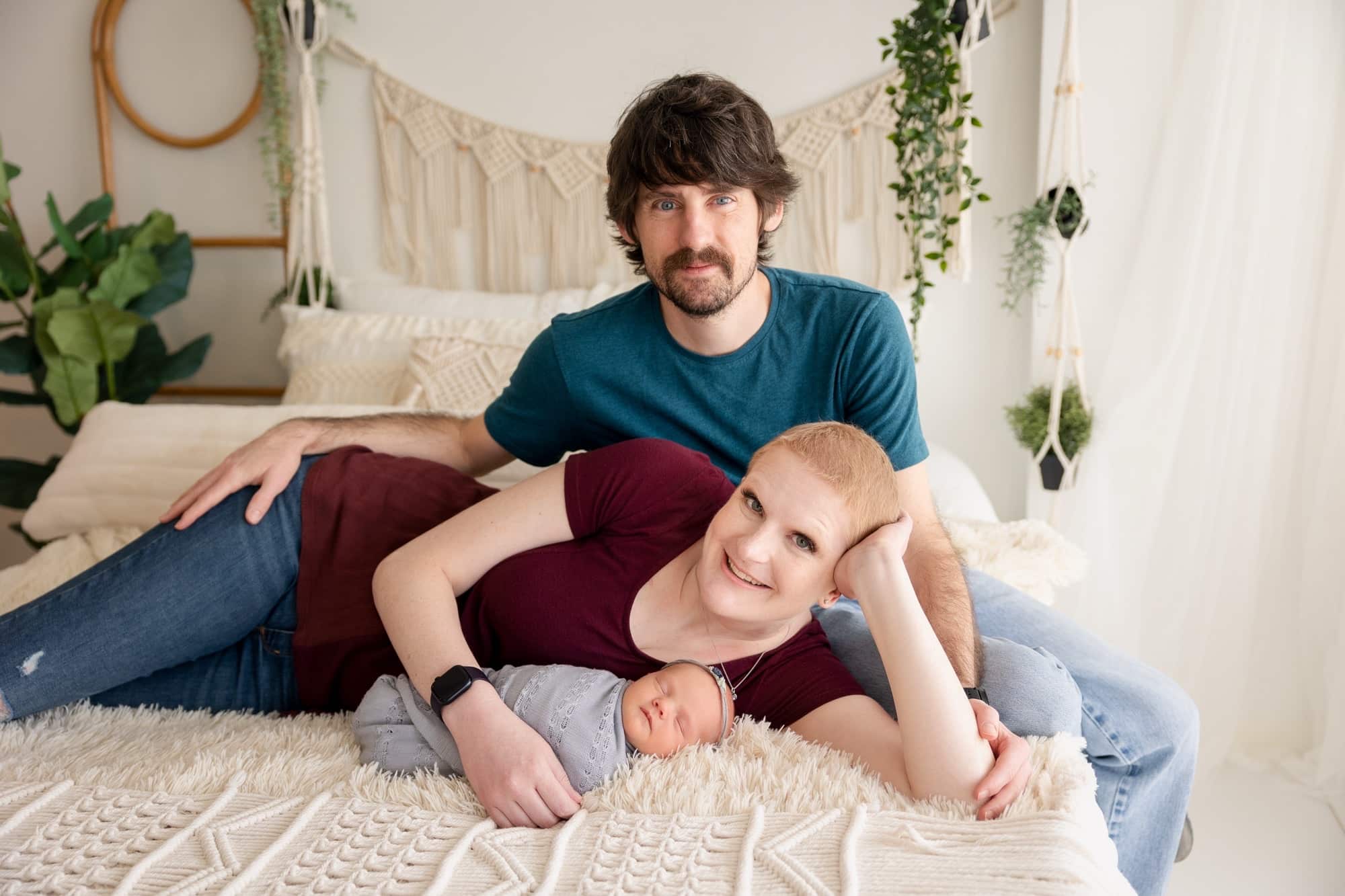
Featured photo: Arrick Photography
Kirsten Vulgamott was 12 weeks pregnant when she noticed redness under her left breast after getting out of the shower. Then, she felt a lump. A registered nurse at the time in UT Health Tyler’s emergency department, Vulgamott had just finished a night shift when she made the discovery.
“Between the pregnancy hormones and being up all night working, I burst into tears,” she said. “Immediately, my head went to the worst thing possible.”
It was her first pregnancy after months of trying to conceive, so despite her concern, Vulgamott hoped the lump was related to pregnancy hormones or mastitis. She went to the doctor and had the area lanced, believing it was an abscess. But, when it still hadn’t healed three weeks later, she went to the UT Health East Texas Breast Center for an ultrasound.
“Once he started measuring in my armpit, I knew,” she said. “And he said, ‘There’s a mass there.’”
A biopsy followed, and the next day, Vulgamott learned she had invasive ductal carcinoma, the most commonly diagnosed kind of breast cancer.
She followed the same advice she gives her own patients – Don’t Google. She allowed herself to search just one thing: How many 34-year-old women are diagnosed with breast cancer while pregnant? As she suspected, it was rare.
Vulgamott soon found a source of hope. When she met with her oncologist, Dr. Marc Usrey with UT Health East Texas HOPE Cancer Center, just days after her diagnosis, he told her she was the second patient he had treated for breast cancer during pregnancy. He connected Vulgamott with the other patient, who was doing well several years after her diagnosis.
Hearing from someone who had faced a similar diagnosis while pregnant gave Vulgamott comfort at a time when she needed it most.
Later that week, she met breast surgeon Dr. Christine Moulds-Merritt. The following day, Vulgamott underwent surgery to remove the cancerous tumor.
Dr. Moulds-Merritt remembers the meeting well. Vulgamott was the first patient she saw after joining UT Health East Texas following a longtime surgical practice in Longview.
“I remember thinking about the joy of her becoming a mom while also knowing I had two patients to care for,” Dr. Moulds-Merritt said. “I was very encouraged by her pathology and knew she was in excellent hands with her oncology team.”
Going into surgery while pregnant was nerve-wracking, Vulgamott said, but hearing her baby’s heartbeat before and after the procedure gave her reassurance.
After four weeks of recovery, she began chemotherapy at about 20 weeks pregnant.
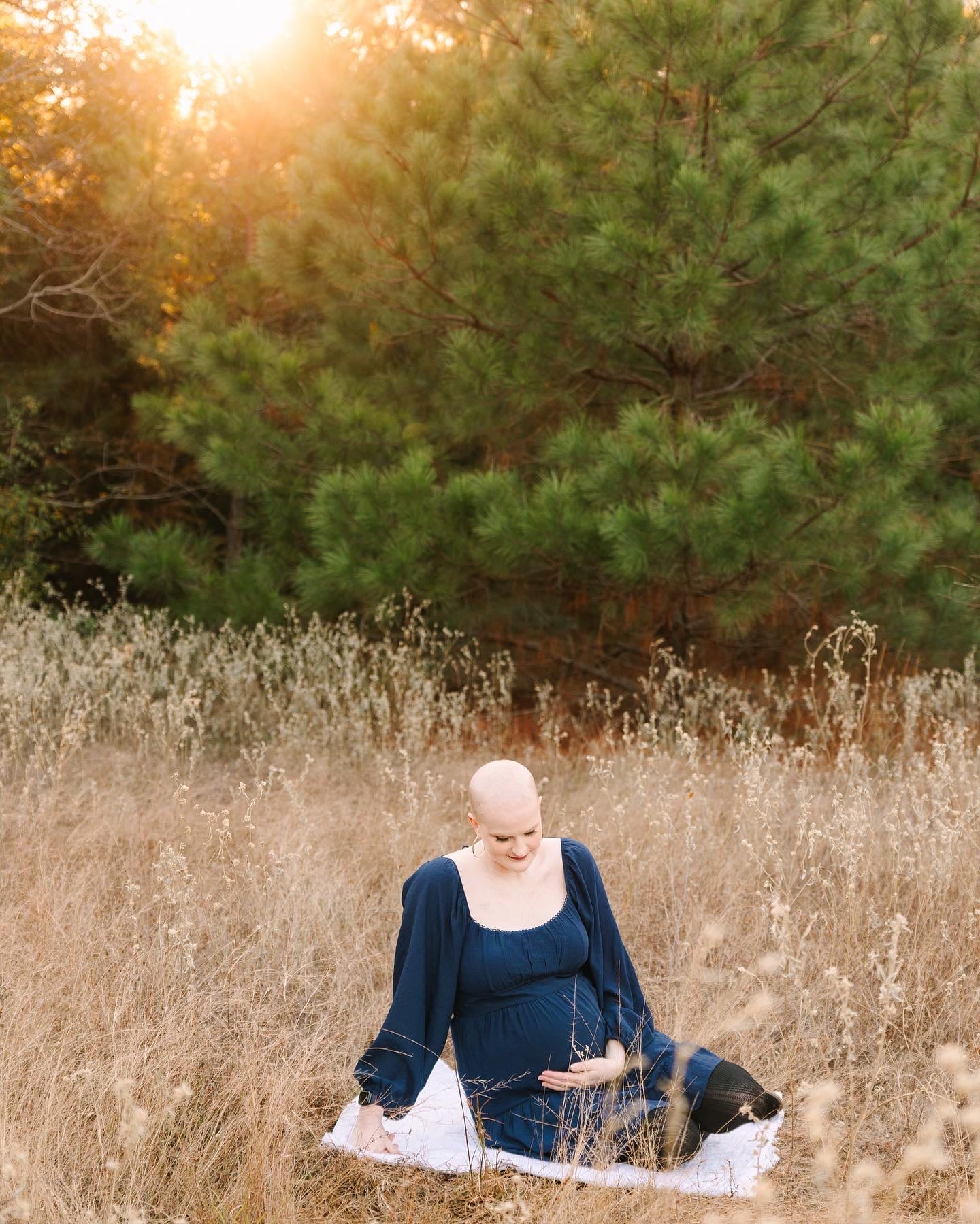
“It was absolutely terrifying, but after a few days it got better and I realized I could do this,” she said.
Vulgamott continued working until she was 34 weeks pregnant because staying busy helped keep her mind off everything she was facing. Her chemotherapy continued throughout much of her pregnancy, pausing for six weeks so she could give birth. After her daughter Hazel was born, Vulgamott resumed treatment and later underwent 35 rounds of radiation.
After Hazel’s birth, Vulgamott took time away from work to recover from treatment. Caring for a newborn while going through radiation left her exhausted, but it also gave her something joyful to focus on.
“That’s one of the blessings of all this,” she said. “I got to stay home with Hazel for a while.”
Vulgamott eventually returned to UT Health Tyler. She now works as a nurse in pre-operative day surgery, a schedule that gives her more time with Hazel, who turns 4 in December. It also puts her alongside many of the physicians who cared for her.
“I’ve gotten to work with all of the doctors who took care of me, so that’s really cool,” she said. “It’s nice to see them all the time, and I don’t really think about cancer much anymore, which is nice.”
Today, Vulgamott uses her experience as both a nurse and a cancer survivor to encourage patients facing frightening diagnoses of their own.
“You don’t know how strong you are until you’re going through it,” she said.
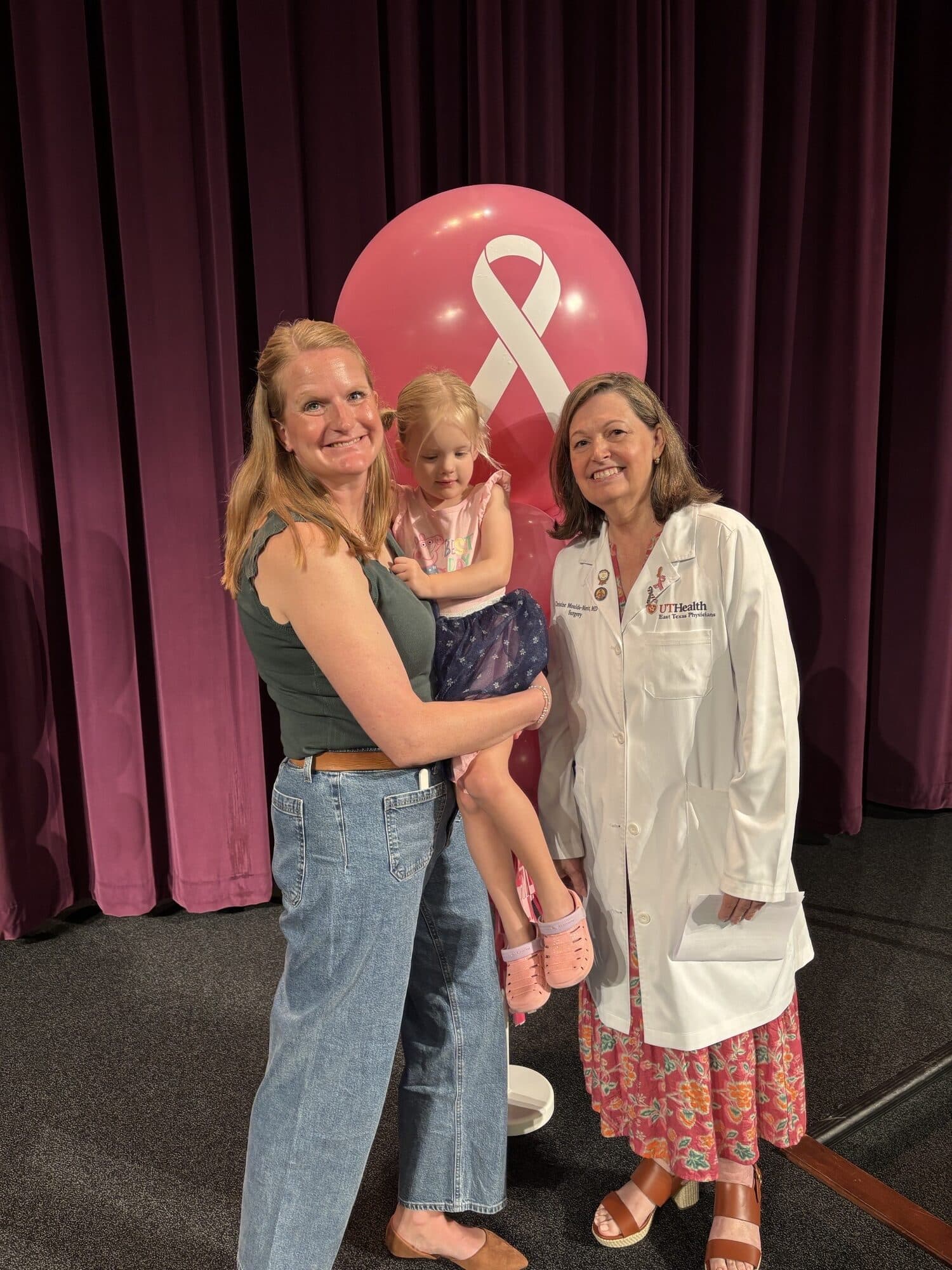
Dr. Moulds-Merritt now sees Vulgamott regularly at work, where the former patient has become a source of encouragement for others.
“It’s wonderful to see how things have come full circle,” Dr. Moulds-Merritt said. “Kirsten encourages me after a long day, and when she sees a patient who is scared, she is incredibly supportive. She’ll go talk to them and is so encouraging.”
Click here to learn more about breast cancer services at UT Health East Texas. Click here to schedule a mammogram online.