
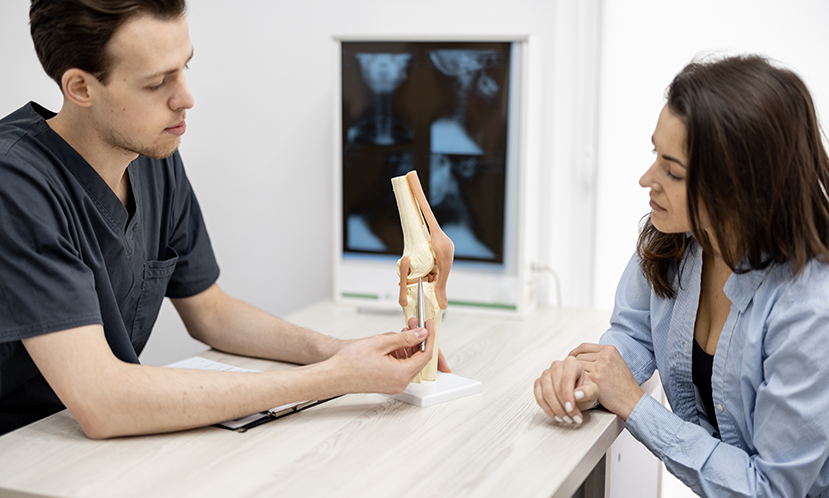
Visiting an orthopedic specialist can be overwhelming, especially if you’re dealing with chronic pain, impaired mobility or uncertainty about your condition. But knowing the right questions to ask during your appointment can help you understand your condition, make informed decisions about your treatment and help you feel empowered. Below are 10 questions to ask an orthopedic specialist during your next appointment.
- What is my diagnosis?
Once your orthopedic specialist has run some tests and asked you questions of their own, they’ll have a better understanding of your condition. Start with the basics by asking them about your specific diagnosis. Ask them for the exact name and nature of your condition. This will help lay the foundation for every decision you’ll make following your diagnosis.
- What’s the root cause of my condition?
Many orthopedic conditions stem from overuse, an injury, structural imbalances or degeneration. By knowing the cause of your condition, you can begin to understand why it occurred and what you can do to keep it from worsening.
- What’s contributing to this problem?
Though it may seem similar to root cause, contributing factors vary in many ways. Root causes tell you what the injury stemmed from, while contributing factors influence your symptoms. Common contributing factors to orthopedic conditions and injuries include:
- Bad posture
- Lifestyle habits
- Repetitive motions
- Weakened muscles
Identifying contributing factors will offer you and your physician more control over your condition and potentially speed up recovery times.
- How severe is my condition?
Knowing the severity of your condition is useful to both you and your physician. When you know where your condition falls on the severity scale, it helps you both make informed decisions about your treatment. It can also:
- Help you avoid further aggravation. Mild and moderate conditions can generally be managed through conservative treatment methods like medication, bracing or physical therapy. If your condition is more severe, avoiding timely treatment could cause permanent damage, long-term mobility issues or chronic pain.
- Determine your treatment plan. Your treatment plan is highly dependent on the severity of your condition. Understanding the stage of your condition will help your doctor create a treatment plan tailored to your needs.
- Set realistic recovery times. While a mild or moderate injury may have quicker recovery times, more severe conditions may require joint replacement surgery, which often requires months of physical therapy.
- Guide activity modification. Your physician can recommend which daily activities, work duties and sports are safe to continue with and which ones need modification and which ones should be paused altogether.
- What are my treatment options?
Once you understand the severity of your condition, your physician will devise a treatment plan. This may include:
- Immobilization, such as braces, splints or casts
- Joint injections
- Over-the-counter or prescription medications
- Physical therapy
- Total or partial joint replacement surgery
Be sure to ask for a breakdown of the treatment options your physician recommends.
- Will my insurance cover orthopedic treatment?
Insurance coverage for orthopedic treatments vary widely. Speak with your insurance provider as well as your physician early on to avoid surprise costs down the road.
- How long will recovery take?
Once your physician recommends a treatment plan, ask what recovery looks like and how long it will take. Some specific questions to ask include:
- What sort of recovery can I expect week to week?
- What milestones indicate progress?
- What could delay my healing?
- Can I expect a full recovery, or should I be prepared to experience any lasting symptoms?
- Do I need physical therapy?
Physical therapy is a cornerstone of orthopedic care. If your physician recommends it, ask how often you’ll need sessions and what sort of exercises you can supplement at home to speed up your recovery.
- How do I prevent further injury/reoccurrence?
Future prevention is just as important as treatment, particularly if your condition stems from an injury, overuse or repetitive motion. Ask your orthopedic specialist what sort of exercises, lifestyle modifications or daily activity adjustments you can make to protect your joints and preserve your long-term musculoskeletal health.
- How often will I need follow-up appointments?
Follow-up appointments help your doctor track your progress and, when necessary, make adjustments to your treatment plan. Knowing your care schedule ahead of time can help you stay consistent with treatment and on track with recovery.
Take Control of Your Health
Seeing an orthopedic specialist offers an opportunity for you to be an active participant in your own long-term health. By asking informed questions, you can gain a greater understanding of your health. Write down your questions ahead of time and don’t hesitate to ask for clarification on anything – your body will thank you for it.