
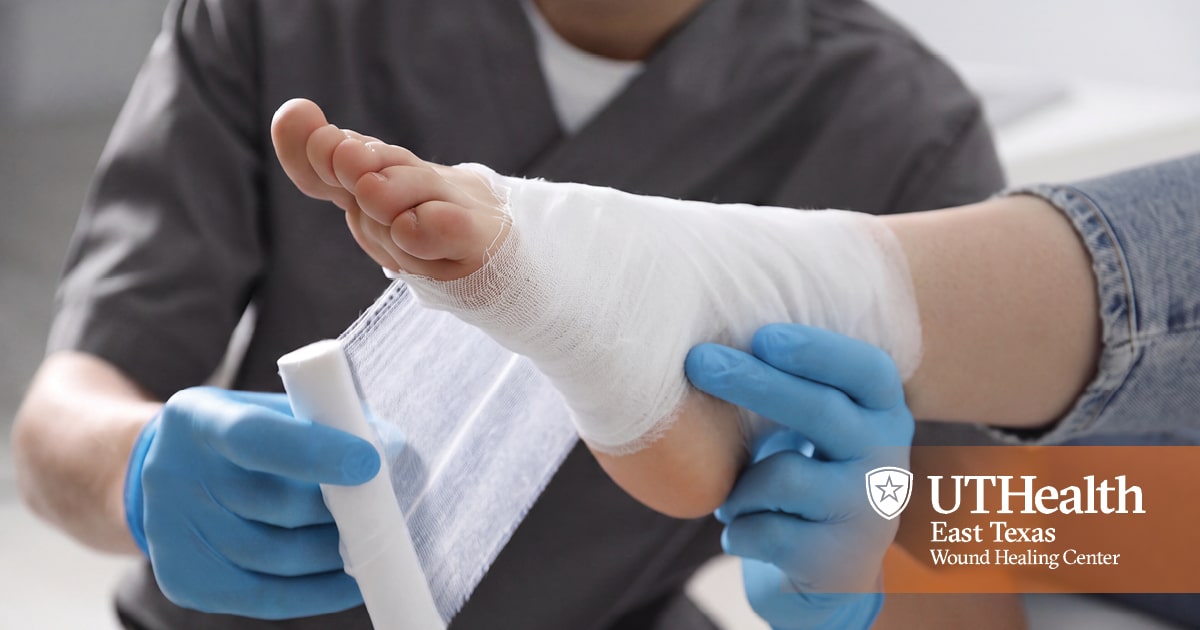
Many people are familiar with diabetes or live with the condition themselves. What many do not realize is that diabetes can lead to serious complications that affect mobility, independence and overall quality of life.
One of the most significant and often overlooked complications of diabetes is the development of a diabetic foot ulcer (DFU). These wounds can begin as something as minor as a blister, callus or small cut, but without prompt treatment they can become limb-threatening and even life-threatening.
Diabetes affects more than 40 million people in the United States, including an estimated 11 million people who remain undiagnosed. Among those with diabetes, 19% to 34% will develop a diabetic foot ulcer during their lifetime.
About DFUs
Once a diabetic foot ulcer develops, the consequences can be severe. About 20% of patients will require a lower-extremity amputation, and diabetic foot ulcers precede approximately 85% of non-traumatic lower-limb amputations. Perhaps most concerning: studies show that nearly half of patients who undergo a major lower-extremity amputation die within two years of the procedure.
While these numbers are alarming, there is also encouraging news: many diabetic foot ulcers are preventable. Research shows that proper diabetes management and routine foot care can significantly reduce the risk of developing a foot ulcer. In some studies, the incidence of DFUs has been reduced by as much as half through preventive measures and early intervention. Simply put, the best way to treat a diabetic foot ulcer is to prevent it from occurring in the first place.
Risk factors
Several factors can increase a person’s risk of developing a DFU, including:
- Poorly fitting shoes
- Improper nail care
- Poor foot hygiene
- Structural foot problems creating areas of increased pressure such as bunions, hammertoes and calluses
- Smoking
- Excessive alcohol use
- Obesity
- Kidney disease
- Heart disease
- Peripheral vascular disease
- Vision problems
The more risk factors a person has, the greater the likelihood of developing a foot ulcer. Fortunately, many of these risks can be improved or managed with appropriate medical care and lifestyle changes.
Most diabetic foot ulcers develop because of a combination of factors. Patients with diabetes often develop neuropathy, or loss of feeling in the feet, making it difficult to notice injuries. At the same time, diabetes can lead to decreased circulation, reducing the body’s ability to heal. When these conditions occur alongside foot deformities or repeated friction from shoes, even a small injury can progress into a serious wound.
Prevention
The foundation of prevention is good diabetes control. Working closely with a primary care provider or endocrinologist can help keep blood sugar levels within a healthy range and reduce the risk of nerve damage and vascular disease.
One important number every patient should know is their Hemoglobin A1c (HbA1c), which reflects average blood sugar control over the previous two to three months. Understanding your HbA1c, along with your daily glucose readings, can help you take an active role in managing your health.
Just as important is paying attention to your feet. Patients with diabetes should inspect their feet every day for cuts, blisters, redness, swelling, drainage or changes in skin color. Shoes should fit properly and provide protection without causing pressure or rubbing. Walking barefoot should be avoided, even indoors. Regular medical visits are also essential, allowing healthcare providers to assess circulation, screen for neuropathy, and identify problems before they become serious.
Getting treatment
If you do develop a foot wound, do not ignore it. Early treatment can make a tremendous difference in healing outcomes and may help prevent hospitalization or amputation.
At the UT Health East Texas Wound Healing Center in Tyler, we offer a multidisciplinary approach focused on both healing existing wounds and preventing future ones. Treatment may include:
- Wound debridement
- Infection management
- Pressure relief
- Restoration of blood flow
- Advanced wound dressings
- Therapies and nutritional support
Studies have shown that when a comprehensive team approach is used, the risk of amputation can be reduced dramatically.
The bottom line is simple: diabetes does not have to lead to a diabetic foot ulcer, and a diabetic foot ulcer does not have to lead to an amputation. By controlling your diabetes, practicing good foot care and seeking medical attention at the first sign of a problem, you can significantly reduce your risk and protect your long-term health.
If you notice a wound, blister or sore on your foot, don’t wait. Ask your physician for a referral to the UT Health East Texas Wound Healing Center or call 903-526-4325 for more information.